The role Myofunctional Therapy in treating Obstructive Sleep Apnoea (OSA) & sleep disorders

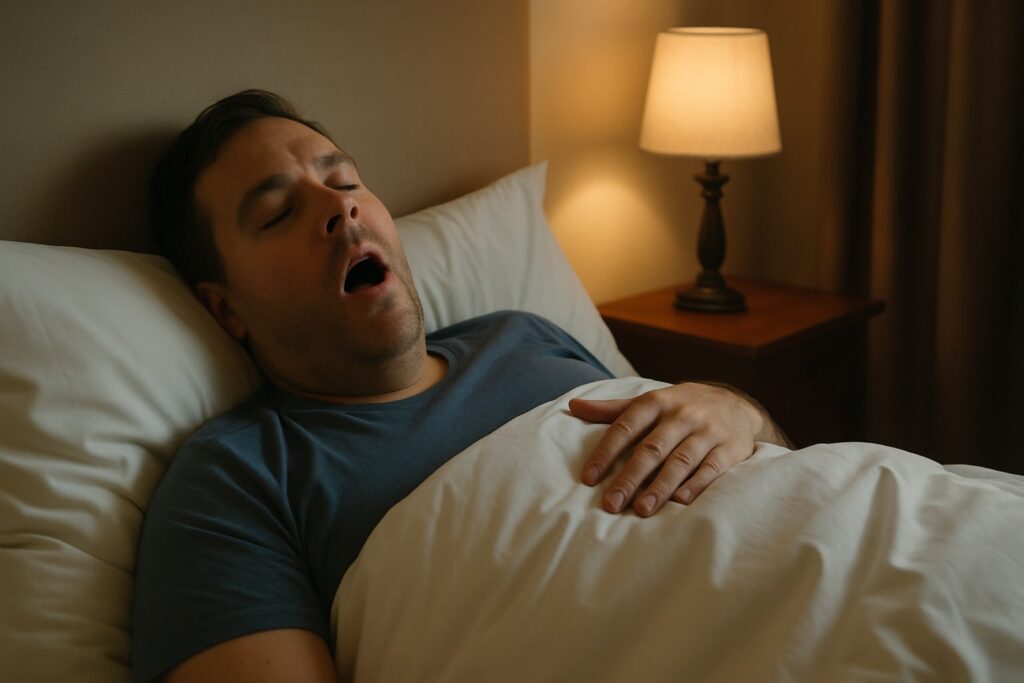
Table of Contents
If you or your child snores loudly, wakes frequently through the night, or experiences excessive tiredness during the day, there could be more to it than poor sleep habits. Obstructive Sleep Apnoea (OSA) is a common yet underdiagnosed condition that disrupts breathing during sleep and can significantly impact health, mood, and quality of life.
While many treatments exist for OSA, from CPAP machines to surgery, an emerging, evidence-based therapy is gaining traction: myofunctional therapy. This natural, exercise-based approach focuses on strengthening the muscles of the face, tongue, and throat to improve breathing patterns and reduce airway collapse during sleep.
In this comprehensive guide, we’ll explore:
- Understanding OSA: What it is, how it affects adults and children, early warning signs, and risk factors such as obesity, craniofacial structure, and poor muscle tone.
- Diagnosis of OSA: The different methods used to diagnose OSA, including in-lab and at-home testing, and their relative strengths.
- Myofunctional Therapy Explained: How this therapy works, what types of exercises are used, and how it complements traditional treatments.
- Scientific Evidence and Outcomes: A summary of the research showing how myofunctional therapy improves sleep quality, reduces apnoea events, and enhances overall well-being.
- Implementation and Practical Considerations: Who is best suited for this therapy, what to expect during a treatment programme, and how it integrates with other interventions.
Whether you’re an adult struggling with daytime sleepiness or a parent concerned about your child’s snoring, understanding myofunctional therapy could help you find a safe and effective path to better sleep and health.
What is Obstructive Sleep Apnoea (OSA)?
OSA is a sleep-related breathing disorder caused by repeated narrowing or collapse of the upper airway during sleep. These obstructions lead to either partial (hypopnoea) or complete (apnoea) pauses in breathing, often followed by brief awakenings or arousals as the body attempts to resume airflow. These episodes can occur hundreds of times throughout the night, disrupting deep sleep cycles and lowering oxygen levels.
Key Symptoms
- Loud, habitual snoring: Caused by turbulent airflow through a narrowed or floppy airway. It is a strong indicator of partial airway obstruction, especially when chronic.
- Gasping or choking during sleep: This reflexive response occurs when the brain senses oxygen deprivation and triggers an arousal to reopen the airway.
- Frequent night waking or insomnia: Repeated sleep fragmentation can prevent the brain from entering restorative deep and REM sleep phases.
- Morning headaches: Resulting from overnight carbon dioxide retention and low oxygen levels.
- Excessive daytime sleepiness (EDS): A hallmark sign of OSA due to unrefreshing sleep. Patients may fall asleep in passive situations (e.g., reading or driving).
- Cognitive and mood disturbances: Includes memory lapses, poor concentration, irritability, depression, and anxiety—all linked to sleep deprivation and oxygen desaturation.
In children, OSA may present differently and is often misdiagnosed:
- Hyperactivity or behavioural issues: Instead of appearing sleepy, children often display restlessness or disruptive behaviour.
- Poor academic performance: Sleep deprivation can impair attention, memory consolidation, and learning.
- Bedwetting or night terrors: Linked to frequent sleep disruptions and lack of deep sleep.
- Mouth breathing and restless sleep: Children with OSA may sleep with their mouths open and move excessively during the night.
Prevalence
OSA affects an estimated 14% of men and 5% of women, but prevalence increases significantly with age, obesity, and anatomical risk factors such as a large tongue, narrow palate, or retrognathic jaw. Among postmenopausal women, prevalence rises and becomes closer to male levels.
In paediatric populations, up to 5% of children are affected, with higher rates seen in those with enlarged tonsils and adenoids, neuromuscular disorders, or craniofacial abnormalities. Despite its frequency, OSA is often undiagnosed or misattributed to behavioural or learning disorders.
Health Risks of Untreated OSA
OSA isn’t just about disrupted sleep. Left untreated, it can contribute to serious and sometimes life-threatening conditions:
- Hypertension and cardiovascular disease: Repeated drops in oxygen and surges in blood pressure strain the cardiovascular system and contribute to long-term damage.
- Metabolic disorders: Chronic sleep fragmentation and hypoxia disrupt glucose metabolism and increase insulin resistance, raising the risk for type 2 diabetes.
- Increased stroke and heart attack risk: Inflammatory markers and endothelial dysfunction induced by OSA contribute to vascular disease.
- Memory loss and cognitive decline: Poor sleep impairs brain plasticity and may accelerate neurodegeneration, increasing dementia risk.
- Mood disorders: Persistent fatigue can lead to depression, irritability, and even symptoms of anxiety or panic attacks.
- Accidents and injuries: Microsleeps and slow reaction times raise the risk of car accidents and workplace injuries. Individuals with untreated OSA are several times more likely to be involved in road traffic accidents.
For children, the consequences can include impaired physical growth, disrupted social interactions, and increased likelihood of being misdiagnosed with ADHD or other developmental disorders. Early diagnosis and intervention are essential to prevent long-term impact on health and development.
Diagnosing OSA in Adults and Children
A proper diagnosis is crucial for effective treatment. This typically begins with a thorough clinical evaluation that includes:
- Sleep history and questionnaires: Tools like the STOP-BANG (Snoring, Tiredness, Observed Apnoea, high blood Pressure, BMI, Age, Neck circumference, and Gender) or the Epworth Sleepiness Scale (ESS) help screen for sleep apnoea risk. These are not diagnostic tools but help prioritise who needs further testing.
- Physical examination: Clinicians assess for features such as nasal obstruction, enlarged tonsils, a recessed jaw, high-arched palate, and tongue posture. Mallampati score and tonsillar grading may be used to evaluate airway obstruction risk.
- Polysomnography (PSG): Considered the gold standard for diagnosing OSA. It involves an overnight stay in a sleep lab where multiple physiological parameters are recorded, including:
- Airflow through nose and mouth
- Blood oxygen saturation (SpO2)
- Brain activity (EEG)
- Muscle tone and eye movements
- Chest and abdominal movement
- Home Sleep Apnoea Testing (HSAT): A more accessible and cost-effective option for adults with high pre-test probability of OSA and no significant co-morbidities. HSAT devices typically record airflow, oxygen levels, respiratory effort, and heart rate. However, they may under-detect events and cannot identify sleep stages.
The severity of OSA is measured by the Apnoea-Hypopnoea Index (AHI), which quantifies the number of breathing interruptions per hour of sleep:
- 5–14: Mild OSA – often accompanied by symptoms like snoring or morning fatigue
- 15–29: Moderate OSA – typically requires active treatment
- 30+: Severe OSA – associated with significantly elevated health risks and often requires CPAP or combination therapy
In children, diagnosis criteria differ slightly. An AHI > 1 is considered abnormal, and clinical correlation with growth, behaviour, and oxygen levels is critical. PSG remains the preferred diagnostic tool in paediatric cases.
Conventional Treatments for OSA
Once a diagnosis is confirmed, treatment should be tailored to the individual’s symptoms, severity, anatomy, and lifestyle factors. Several conventional treatment options are available, each offering unique benefits and facing distinct limitations.
Continuous Positive Airway Pressure (CPAP)
CPAP is the most commonly prescribed treatment for moderate to severe OSA. It delivers a continuous stream of pressurised air through a mask, preventing the airway from collapsing during sleep. When used consistently, CPAP can virtually eliminate apnoea episodes, improve oxygenation, and restore normal sleep patterns. However, many patients find the equipment uncomfortable, particularly the mask and tubing, and some experience side effects like dry mouth, bloating, or skin irritation. Adherence can be a challenge, especially in the long term, and some users discontinue therapy without seeking alternatives.
Oral Appliances
For those with mild to moderate OSA or who cannot tolerate CPAP, oral appliances such as mandibular advancement devices (MADs) can be a good alternative. These custom-made dental devices reposition the lower jaw slightly forward to help maintain an open airway. They are smaller, quieter, and more convenient for travel than CPAP machines. However, they must be professionally fitted and monitored for side effects, which can include jaw discomfort or changes in bite alignment over time.
Surgical Options
Surgery is usually considered when anatomical abnormalities are contributing to airway obstruction or when non-invasive therapies have failed. Procedures vary in scope. For children, removing enlarged tonsils and adenoids can be curative. In adults, more complex interventions such as uvulopalatopharyngoplasty (UPPP), nasal surgeries, or maxillomandibular advancement (MMA) may be considered. While surgery can significantly reduce symptoms, it is invasive, carries risks, and may not always eliminate the need for CPAP or other treatments.
Lifestyle Modifications
Addressing lifestyle factors is essential for managing OSA, especially in milder cases. Weight loss, even as little as 5–10% of body weight, can significantly reduce the severity of OSA. Sleeping on one’s side, rather than the back, helps prevent airway collapse. Reducing or avoiding alcohol and sedatives—particularly before bedtime—can keep airway muscles from relaxing excessively. Smoking cessation also contributes to reduced inflammation and improved airway function. These behavioural changes are often recommended as part of a comprehensive treatment plan and can improve the effectiveness of other therapies.
What is Myofunctional Therapy?
Myofunctional therapy (MFT) is a structured, exercise-based approach aimed at retraining the muscles of the mouth, face, and upper airway to improve breathing and swallowing patterns. It is grounded in the understanding that muscle dysfunction and poor oral habits—such as chronic mouth breathing or low tongue posture—can contribute to airway instability during sleep.
The therapy addresses issues such as weak tongue muscles, poor lip seal, and inadequate coordination of the oropharyngeal muscles. By strengthening these muscles and promoting healthier breathing habits, MFT supports long-term improvements in airway patency and reduces the risk of airway collapse.
Typical goals of therapy include improving tongue strength and mobility, promoting correct tongue resting position against the palate, ensuring the lips remain closed at rest, and reinforcing nasal breathing. Over time, these changes can help reduce snoring and lessen the frequency and severity of apnoea episodes.
Myofunctional therapy is delivered by qualified practitioners such as speech and language therapists, orofacial myologists, or specially trained dental and ENT professionals. After a comprehensive assessment, a tailored programme is developed to address the individual’s specific needs and goals. Programmes generally include weekly sessions (in person or online) over a period of 8–12 weeks, supported by daily home practice using guided exercises.
Patients are encouraged to track their progress, often through video recordings, digital tools, or follow-up assessments. MFT is safe, non-invasive, and suitable for both adults and children. It is particularly effective when used alongside other treatments like CPAP or oral appliances, enhancing their efficacy and improving patient adherence.
Scientific Evidence Supporting Myofunctional Therapy
Myofunctional therapy plays a vital role in treating obstructive sleep apnoea (OSA) and related sleep disorders by retraining the muscles of the tongue, face, and throat. Through targeted exercises, it improves tongue posture, encourages nasal breathing, and increases airway stability during sleep. Research shows it can significantly reduce apnoea events, improve sleep quality, and enhance outcomes when used alongside CPAP or oral devices—making it a safe, effective, and non-invasive therapy for both adults and children.
Over the past decade, a growing body of clinical research has validated the role of myofunctional therapy in treating sleep-disordered breathing, including OSA. A landmark 2015 meta-analysis published in the journal Sleep found that MFT led to a 50% reduction in apnoea-hypopnoea index (AHI) in adults and a 62% reduction in children. In addition to fewer apnoeas and hypopnoeas, patients also reported reductions in snoring, improved sleep quality, and less daytime sleepiness.
More recent studies have built on these findings. A 2021 systematic review classified the evidence supporting MFT for sleep apnoea as Level 1a—the highest grade according to the Oxford Centre for Evidence-Based Medicine. These findings were consistent across a range of patient populations, including those with mild to moderate OSA, and those using CPAP or oral appliances in combination with MFT.
Importantly, MFT has also been shown to improve adherence to CPAP therapy. By toning the muscles of the face and throat, it can reduce CPAP leakage and make mask fitting more comfortable. This synergistic effect makes MFT an excellent adjunct treatment for individuals struggling to use their CPAP machines effectively.
What to Expect from a Myofunctional Therapy Programme
The structure of an MFT programme is tailored to each individual based on their symptoms, oral anatomy, and therapy goals. At Breathe First, the process begins with a detailed assessment, where our therapists evaluate tongue posture, lip seal, breathing patterns, and any signs of orofacial dysfunction.
Once assessed, a bespoke programme of exercises is introduced. These exercises target different muscle groups and aim to improve strength, coordination, and tone. Patients are guided through each step and taught how to integrate these exercises into their daily routine. Typical exercises might include tongue slides, palatal presses, nasal breathing drills, and lip seal maintenance. Over time, patients begin to develop new muscle habits and improve resting posture.
Therapy sessions are generally held once per week and are supported by daily home practice. Commitment and consistency are key to success. Most patients begin to see results within a few weeks, although full benefits are usually realised after 2 to 3 months of dedicated work. Therapists track progress regularly and adapt exercises as necessary.
Digital tools, such as mobile apps or video check-ins, may be used to boost engagement and compliance. These platforms also allow patients to visualise their improvement and stay motivated throughout the programme.
Who Can Benefit from Myofunctional Therapy?
MFT is effective for both adults and children. Adults with mild to moderate OSA who are looking for a non-invasive treatment often benefit greatly, especially if they have symptoms such as chronic snoring, mouth breathing, or poor CPAP tolerance. Those who have undergone surgery or use oral appliances may find that MFT enhances their results and supports long-term success.
Parents of children with sleep-disordered breathing may also consider MFT as an early intervention tool. It is particularly helpful for children who continue to snore or struggle with nasal breathing after a tonsillectomy or adenoidectomy. By retraining muscle function, therapy helps ensure that anatomical interventions result in functional improvement.
In both groups, MFT is most effective when used as part of a comprehensive care plan involving ENT specialists, dentists, sleep consultants, and therapists. At Breathe First, our integrated approach ensures each patient receives the support and guidance they need to achieve lasting improvements.
In summary
Obstructive Sleep Apnoea is a serious yet manageable condition that affects millions of adults and children. While conventional treatments like CPAP, oral appliances, and surgery play an important role, they don’t always address the underlying muscular dysfunctions that contribute to airway collapse during sleep.
Myofunctional therapy offers a safe, effective, and natural way to strengthen the muscles of the mouth, face, and throat—helping to stabilise the airway and improve breathing patterns. Whether used on its own for mild cases or in conjunction with other treatments for more severe OSA, MFT empowers individuals to take an active role in improving their health.
At Breathe First, we’re committed to offering science-backed, personalised care that supports long-term wellbeing. If you or your child struggles with snoring, fatigue, or sleep apnoea, myofunctional therapy may offer the lasting relief you’ve been searching for.
What is myofunctional therapy and how does it treat sleep apnoea?
Myofunctional therapy is a targeted exercise-based approach that strengthens and retrains the muscles of the face, tongue, and throat. By improving muscle tone and promoting correct tongue posture and nasal breathing, it reduces the likelihood of airway collapse during sleep—helping to reduce or eliminate symptoms of obstructive sleep apnoea (OSA).
Is myofunctional therapy backed by scientific evidence?
Yes. Multiple studies and meta-analyses show that myofunctional therapy can reduce the apnoea-hypopnoea index (AHI) by up to 50% in adults and 62% in children. It also improves snoring, sleep quality, and daytime fatigue, and has been shown to improve adherence to CPAP therapy.
How long does it take to see results from myofunctional therapy?
Most patients begin to see improvements within a few weeks. A full programme usually lasts between 8–12 weeks, with consistent daily practice. Significant improvements are typically seen after 2 to 3 months of regular therapy.
Can children benefit from myofunctional therapy?
Yes. Myofunctional therapy is particularly effective for children who continue to snore or mouth breathe after a tonsillectomy or adenoidectomy. It helps restore proper muscle function and supports healthy breathing patterns as they grow.
Is myofunctional therapy safe?
Yes. It is a non-invasive, low-risk therapy. Side effects are rare and may include mild muscle fatigue in the tongue or jaw during the early stages of treatment.
Who provides myofunctional therapy?
Myofunctional therapy is typically delivered by trained specialists such as speech and language therapists, orofacial myologists, or dental professionals with additional training in airway-focused therapy. At Breathe First, our therapists offer personalised programmes in-person and online.
Can I combine myofunctional therapy with CPAP or an oral appliance?
Absolutely. Myofunctional therapy works well as an adjunct to other treatments. It helps reduce CPAP leakage, improves comfort, and supports better long-term outcomes when used alongside oral appliances or after surgery.
Key Citations on Myofunctional Therapy for OSA
- Camacho et al. (2015) – Systematic review & meta-analysis
Found a 50% reduction in AHI and decreased snoring in adults and children following myofunctional therapy.
🔗 https://pubmed.ncbi.nlm.nih.gov/25348130/ Taylor & Francis Online+12MDPI+12ScienceDirect+12PubMed+1PubMed+1 - Guimarães et al. (2009) – Randomised controlled trial in adults
Demonstrated significant reductions in neck circumference and OSA severity after 3–6 months of oropharyngeal exercises.
🔗 https://www.mdpi.com/1648-9144/57/4/323 mhealth.jmir.org+2MDPI+2Western University+2 - Saba et al. (2024) – Laryngoscope systematic review & meta-analysis
Showed average AHI reduction of –10.2 events/hour and improved ESS & PSQI scores among adult patients.
🔗 https://pubmed.ncbi.nlm.nih.gov/37606313/ Wikipedia+5PubMed+5Stanford Health Care+5 - Bandyopadhyay & team (2020) – Meta-analysis in children
Reported a 43% decrease in AHI and modest oxygen level improvements.
🔗 https://pubmed.ncbi.nlm.nih.gov/32861058/ IU Indianapolis ScholarWorksNew York Post+2PubMed+2ScienceDirect+2 - Li et al. (2024) – Adult/pediatric network meta-analysis
Confirmed significant efficacy of MFT, particularly in adults.
🔗 https://doi.org/10.1111/adj.13058 Lippincott Journals+4Wiley Online Library+4ScienceDirect+4 - AirwayGym App trial (2020) – Pilot RCT in severe OSA
53% reduction in AHI among severe OSA patients using an app-based MFT programme.
🔗 https://mhealth.jmir.org/2020/11/e23123/ Verywell Health+6mhealth.jmir.org+6MDPI+6 - Guilleminault et al. (2013) – Pediatric cohort post-adenotonsillectomy
Found that children receiving MFT post-surgery remained OSA-free long-term vs controls who relapsed.
🔗 https://www.mdpi.com/1648-9144/57/4/323 PubMed+3MDPI+3Western University+3MDPI+1Western University+1 - Villa et al. (2014) – RCT in post-AT children
Demonstrated reduced recurrence of OSA and improved tongue strength in the MFT group.
🔗 https://www.uwo.ca/fhs/lwm/teaching/EBP/2018_19/Hale.pdf MDPIWestern University - Breathing retraining in sleep apnoea: a review of approaches and potential mechanisms (2000), Rosalba Courtney https://pubmed.ncbi.nlm.nih.gov/31940122/
- Sleep disordered breathing and daytime sleepiness are associated with poor academic performance in teenagers. A study using the Pediatric Daytime Sleepiness Scale (PDSS) (2007) https://pubmed.ncbi.nlm.nih.gov/18246979/
- Pilot study to assess the potential of oral myofunctional therapy for improving respiration during sleep (2013), https://pubmed.ncbi.nlm.nih.gov/23522598/