Initial T Cards
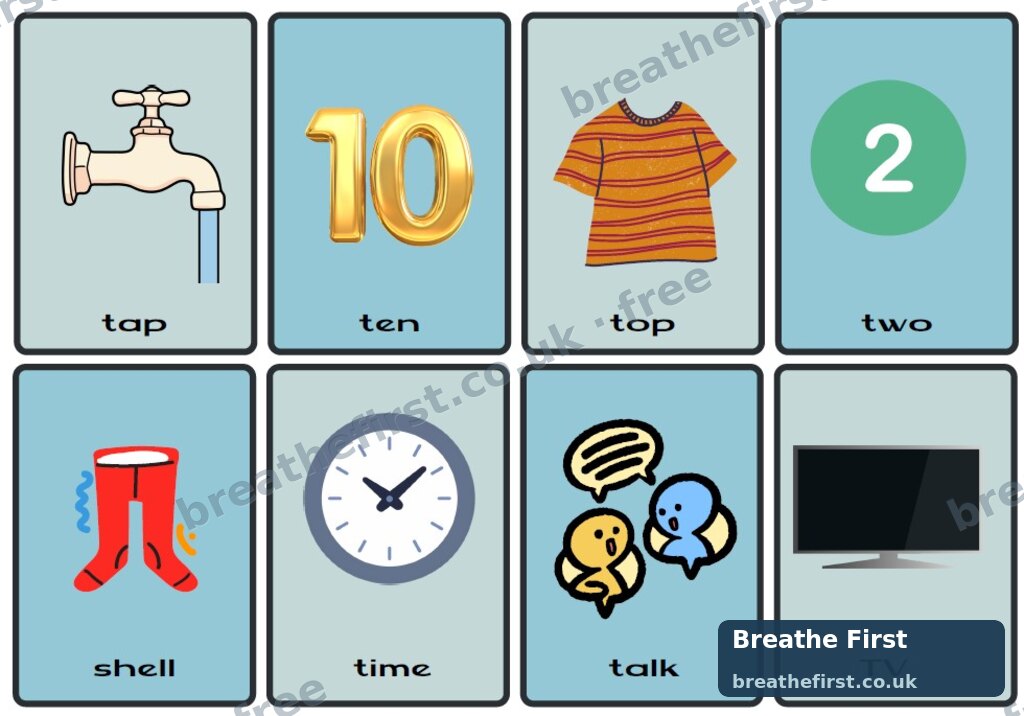
Eight printable flashcards for the T sound
Free · We'll email you the PDF and set up your account so you can grab more anytime.
What this is
Eight printable flashcards for practising the T sound at the start of words: tap, ten, top, two, time, talk, TV, plus one bonus card.
What it helps with
The T sound is made with the tip of the tongue tapping the ridge just behind the upper front teeth, then releasing with a quick puff of air. It’s one of the earliest sounds to develop. Children still learning often swap T for D (saying “dop” for “top”) because D uses the exact same tongue placement with voicing added — so T is usually the cleaner, quieter version of what they’re already doing.
How to use them
- Print, cut, and laminate if you want them to last.
- Ask your child to put their tongue-tip on “the spot” behind their top teeth. A mirror helps.
- Model a quick, quiet “t-t-t” — no voice, just air.
- Add a vowel: “t-ah”, “t-oo”, “t-ee”.
- Then try the card word: “t… ap… tap”.
When to seek support
T usually lands by age three. If your child is three and a half or older and still consistently replacing T with D or K, or if they struggle to lift their tongue-tip to the ridge at all, an assessment can pinpoint why.
Myofunctional Therapy Perspecitve
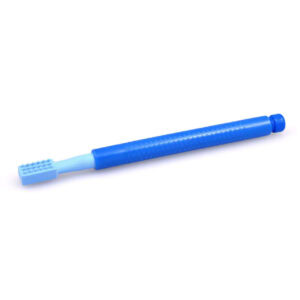
We say this/these sounds with the tip of our tongue to the spot behind our upper incisors, or the palate. – Sometimes, when the tongue is not functioning optimally, or is always compensating for an airway issue, the tongue cannot always easily find this spot. The sound scan be made with the wring part of the tongue to the spot, or with the tongue pushing into or between teeth. – Working on these sounds as part of a myofunctional programme can be helpful for myofunction, as well as improving speech clarity – Myospots (fruit flavours applied to ‘the spot’ can be a great helper for children to find the right spot