Everyday Mewing: “Mew While You Drink” for Better Tongue Posture

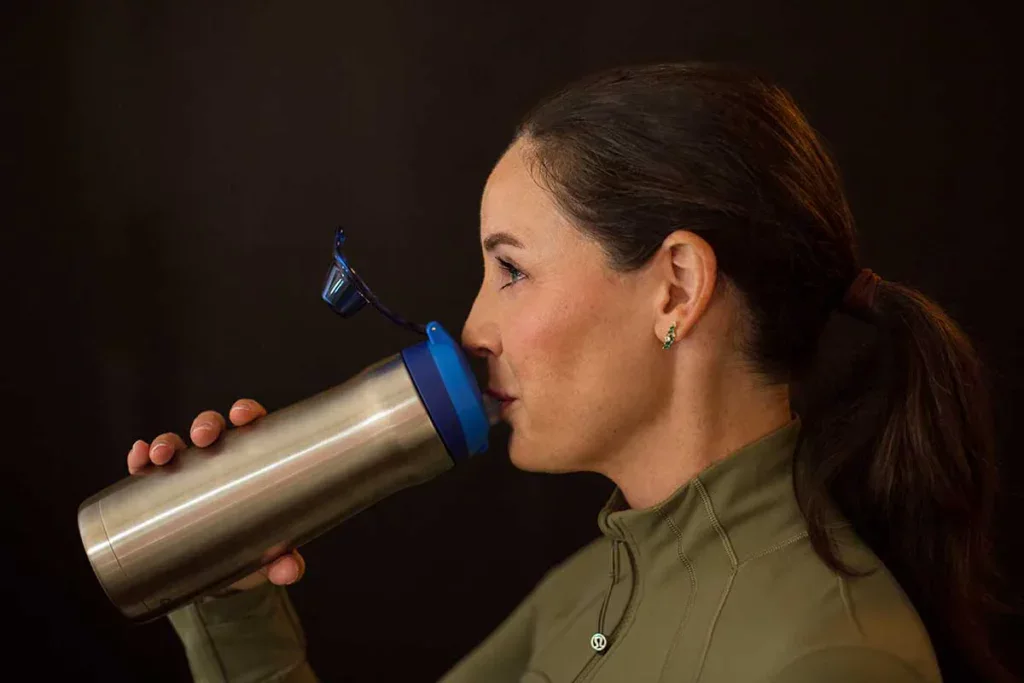
Table of Contents
Mewing in 60 seconds: what to do and why it helps
Everyday mewing means resting the tongue on the palate with lips closed while breathing through the nose. In children, mouth breathing is common (≈11–56%) and linked with less favourable dentofacial growth [1]. Nasal breathing conditions air and adds nasal nitric oxide, supporting airway defence and efficient gas exchange [2,3]. Structured orofacial myofunctional therapy (OMT) can reduce snoring and improve AHI in selected patients as adjunct care [4]. A Myo Nozzle adds light sipping resistance so each sip cues posterior-tongue lift, lip seal and nasal breathing turning hydration into habit practice; it is a behavioural cue, not a medical treatment [5].
What mewing really means and how sipping helps tongue posture
“Mewing” is a popular term for consciously placing the tongue against the roof of the mouth, keeping the lips closed, and encouraging nasal breathing in day-to-day life. In clinical language, this overlaps with “resting tongue posture” and elements of orofacial myofunctional therapy (OMT), a behavioural approach that retrains oral and facial muscles for healthier swallowing, breathing, and oral rest habits. While online claims about mewing changing bone structure are often overstated and not well supported by research, the underlying habits tongue-to-palate contact, lips together, and nasal breathing – align with recognised principles in airway and oral-motor health. Professional bodies caution that “mewing” as a reshape-your-face trend lacks strong clinical evidence; however, correct tongue posture and OMT have growing, peer-reviewed support in specific areas such as sleep-disordered breathing when used as part of a professional care pathway (American Association of Orthodontists, Does Mewing Actually Reshape Your Jaw?). American Association of Orthodontists
To make those habits automatic, we use the Myo Nozzle, a small, reusable drinking tip that fits standard 8–10 mm straws or our stainless-steel bottle. It adds light sipping resistance so each swallow naturally lifts the back of the tongue to the palate, seals the lips, and encourages nasal breathing, the same posture targets as mewing, but built into something you already do many times a day. In effect, daily hydration becomes micro-repetitions of tongue training, similar to elements of orofacial myofunctional therapy.
If ‘mewing’ slips your mind, the Myo Nozzle turns every sip into tongue-up practice easy, automatic, effective. Shop the Myo Nozzle.
Featured products
-
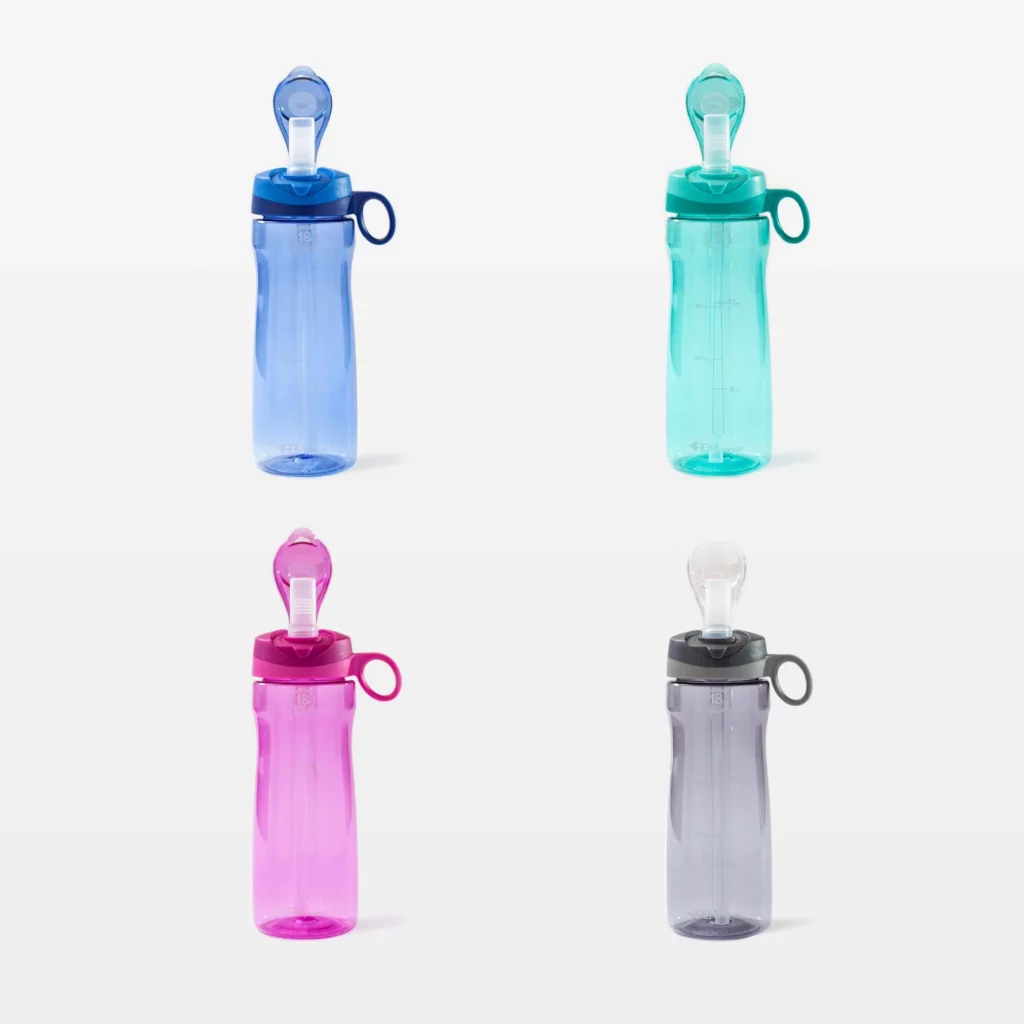
REMplenish 18oz / 511ml Plastic Bottle Kit with Myo-Nozzle & Straw
Price range: £62.99 through £99.00 -
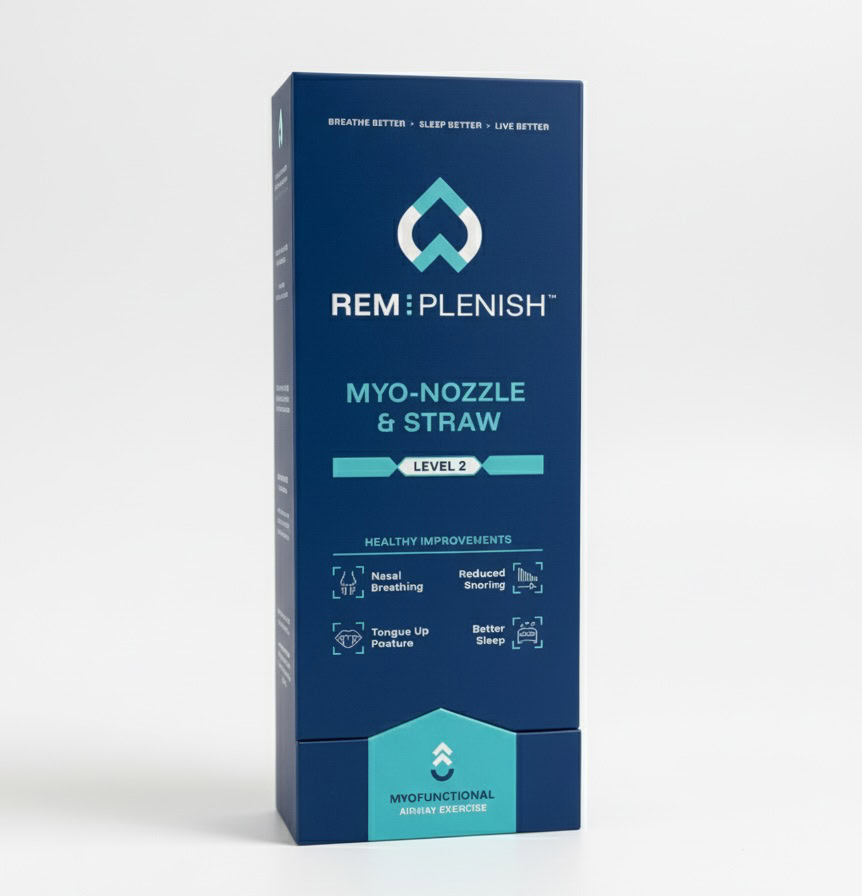
REMplenish Myo-Nozzle & Straw
Price range: £56.99 through £99.99 -
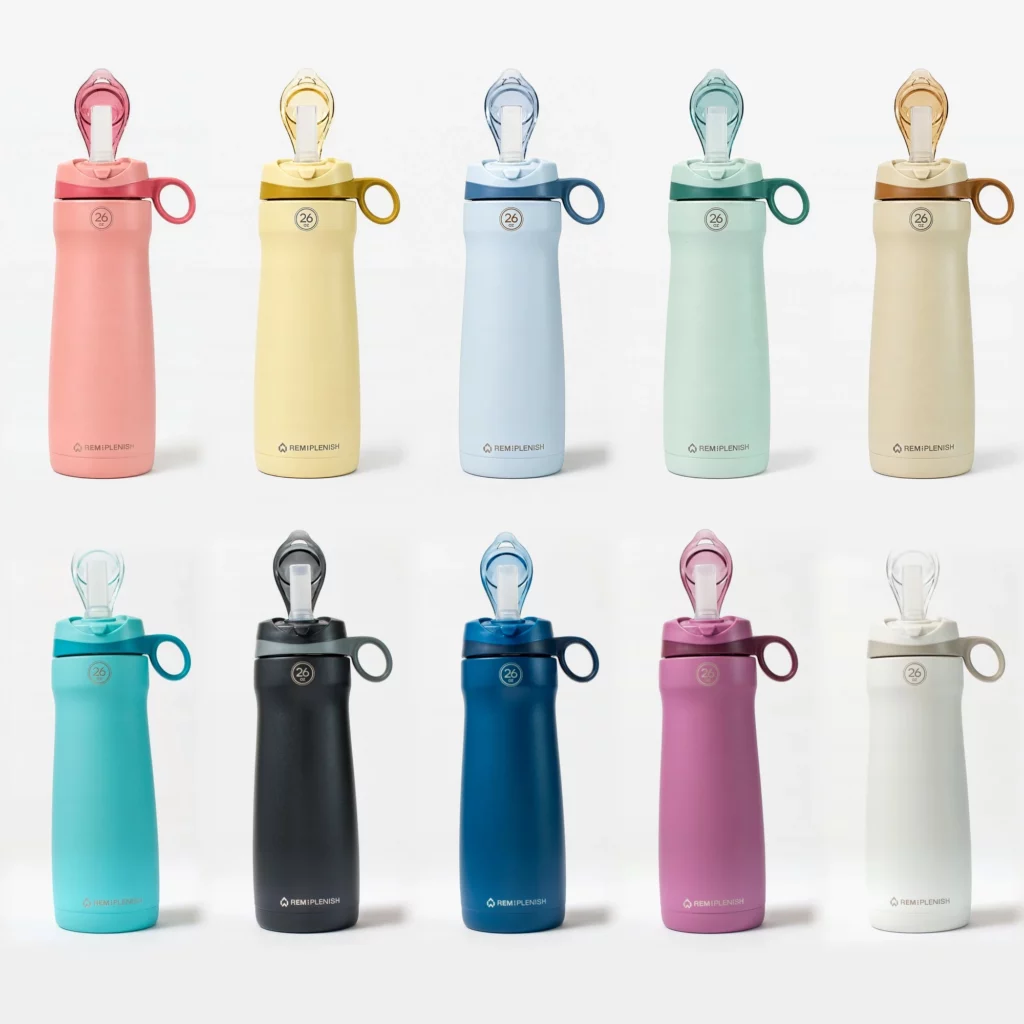
REMplenish 26oz / 738ml Stainless-Steel Bottle, Myo-Nozzle & Straw Kit
Price range: £96.99 through £139.99 -
REMplenish 32oz / 909ml Plastic Bottle Kit with Myo-Nozzle & Straw
Price range: £63.00 through £99.00 -
REMplenish Myo-Nozzle, Straw & Stainless-Steel Bottle Kit – 444ml / 15oz
Price range: £89.99 through £130.00

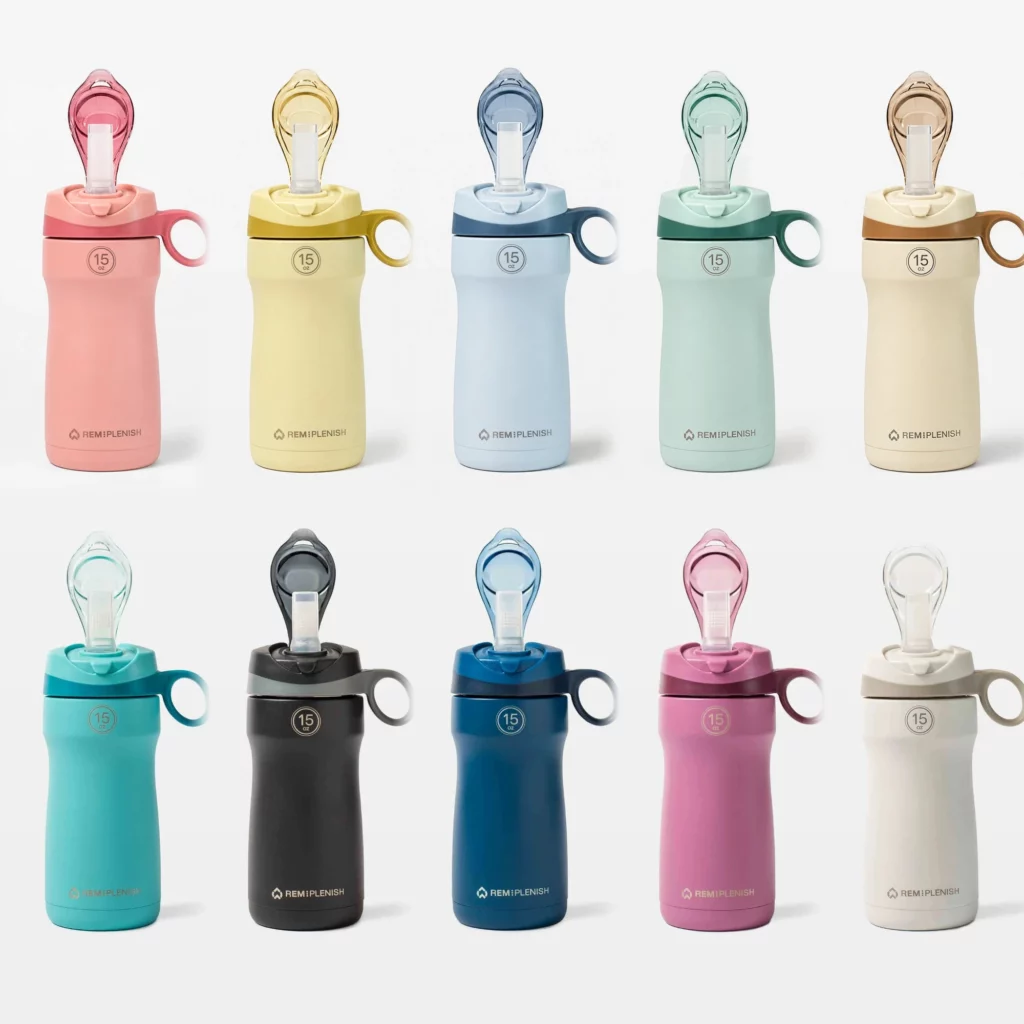
In this article we will translate the useful parts of mewing into everyday, practical habits and shows how to make them stick especially by pairing the habit with sipping water using a Myo Nozzle (“mew while you drink”). The Myo Nozzle creates a gentle suction challenge that encourages the back of the tongue to lift towards the palate during each sip, an action pattern akin to components of OMT and infant suck-swallow mechanics, so that day-in, day-out hydration becomes a small dose of tongue training. For product details, see the REMplenish™ Myo Nozzle and the Myo Nozzle & Stainless-Steel Bottle Kit (444 ml).
How common mouth breathing is and where mewing fits for families
Mouth breathing and low tongue posture are not rare. In children, published prevalence estimates for mouth breathing range from about 11% to 56%, depending on age, population, and definitions used in research (Lin et al., The impact of mouth breathing on dentofacial development). PMC Recent school-age samples continue to find notable proportions of habitual mouth breathers, with functional impacts on oral performance (Masutomi et al., Mouth breathing reduces oral function in adolescence). Nature
In adults, the picture is mixed because many people alternate between nasal and oral breathing. Sleep-disordered breathing (especially obstructive sleep apnoea, OSA) is common in mid-life and strongly associated with oral breathing at night. In the UK, NICE guidance acknowledges substantial under-recognition; estimates suggest around 5% of UK adults may have undiagnosed OSAHS (NICE NG202, Context). NICE That figure helps explain why so many adults experience daytime sleepiness and snoring alongside mouth breathing at night (NHS, Sleep apnoea). nhs.uk
Why tongue-up habits (including mewing) support sleep and comfort
Persistently open-mouth breathing bypasses the nose’s core jobs: filtering, warming, and humidifying air, and blending inhaled air with nasal nitric oxide (nNO), a locally produced signalling molecule with bronchodilatory, vasodilatory, and antimicrobial actions that helps ventilation-perfusion matching in the lungs (Tuma et al., Nasal breathing: a neglected factor in metabolic regulation?; Maniscalco & Fiumarella, Nasal nitric oxide flux from the paranasal sinuses). SpringerLink+1 In children, habitual mouth breathing is linked with narrower dental arches, altered dentofacial growth patterns, and oral-function challenges (Lin et al.). PMC In adolescence, mouth breathing correlates with reduced oral functional performance (Masutomi et al.). Nature
Poor tongue posture – where the tongue sits low instead of gently supporting the palate can reduce the stabilising influence of the tongue on the upper dental arch. Contemporary reviews describe the tongue as a “scaffold” that supports palatal shape and dental alignment when it rests to the palate (Deshkar et al., The Influence of the Tongue on the Development of Dental and Skeletal Structures). PMC During sleep, poor oropharyngeal muscle tone contributes to airway collapse in OSA; several systematic reviews and meta-analyses now report that orofacial myofunctional therapy – programmes of tongue, soft-palate, and oropharyngeal exercises can improve symptoms and reduce apnoea-hypopnoea index (AHI), particularly in mild to moderate disease or as adjunct therapy (Koka et al., Orofacial Myofunctional Therapy in Obstructive Sleep Apnea; Liu et al., The Effects of OMT on Children with OSA; Xu et al., Efficacy of myofunctional therapy for obstructive sleep apnoea). PMC
How tongue, palate and nose work together for healthy oral posture
Think of the tongue as a dynamic, multi-section muscle that should rest lightly against the hard palate, with the tip near the alveolar ridge (the “spot” just behind the front teeth) and the middle and posterior portions sealing upward to the palate. This tongue-to-palate seal does several jobs at once: it helps maintain a broader palatal shape, stabilises the upper arch against inward pressure from the cheeks, supports efficient swallowing, and keeps the airway more stable in quiet breathing by helping the upper airway tissues resist collapse. Contemporary overviews emphasise how tongue posture interacts with craniofacial form and function in both children and adults (Deshkar et al.; Sun et al., Association between tongue position and dentofacial skeletal patterns). PMC
Nasal breathing complements this by conditioning inhaled air and mixing it with nitric oxide from the paranasal sinuses. Reviews in 2022–2024 summarise that upper airway nitric oxide plays roles in host defence and in fine-tuning ventilation–perfusion in the lungs; nasal breathing is associated with higher NO availability than oral breathing (Maniscalco & Fiumarella; Tuma et al.). PMC Although earlier studies reported dramatic increases of nasal NO while humming, recent work shows that such NO boosts do not automatically translate into short-term cognitive or mood changes, reminding us to keep claims modest (Yazdini et al., Induction of nitric oxide via humming does not improve short-term psychological measures). PMC
The Myo Nozzle’s value sits right at this interface of tongue posture and nasal breathing. By adding slight resistance and a directed flow during sips, it nudges the posterior tongue to engage upward akin to the suction-based action babies use while breastfeeding and reinforces the lips-closed, tongue-up pattern that underpins healthy oral rest. Straw-based drinking recruits measurable tongue pressures and timing patterns; while this research is still evolving, instrumented studies confirm that straw intake and effortful swallows engage tongue pressure generation along the palate (Hara et al., Effects of varying fixed lingual apex positions on tongue pressure during straw drinking; Lin et al., Tongue-strengthening exercises on strength and swallowing pressure). PubMed
For deeper background on nasal physiology, nitric oxide, and everyday breathing strategies, you may also like our Breathe First guides on nasal nitric oxide & breathing and the marvellous benefits of humming.
Everyday benefits you can feel: clearer breathing and steadier sleep
For adults and parents, the everyday habit set we’re advocating, tongue to palate, lips together, and nasal breathing offers a low-risk way to support oral function, sleep quality, and comfort, especially when integrated with appropriate professional care where needed.
First, regular tongue-to-palate contact maintains or improves the functional relationship between the tongue and the palate. When the tongue lives up and wide, it provides a gentle, consistent support to the palatal vault rather than leaving the cheeks unopposed. Updated reviews in 2024–2025 reiterate that resting tongue posture influences palatal width and dental arch stability across the lifespan (Deshkar et al.; Sun et al.). PMC
A practical alternative to mewing drills: gentle sipping resistance cues the back of the tongue to the palate while you hydrate. Learn more & buy now.”
Second, prioritising nasal breathing improves how air is prepared for the lungs and increases exposure to endogenous nitric oxide. Current reviews point to NO’s contribution to bronchodilation, vasodilation, antimicrobial defence, and improved gas exchange efficiency, a physiological backdrop that helps explain why nasal breathing can feel smoother and more sustainable during rest and exercise (Maniscalco & Fiumarella; Tuma et al.; Lörinczi et al., Nose vs. mouth breathing, acute effects). PMC+2SpringerLink+2
Third, in people with sleep-disordered breathing, targeted orofacial exercises have shown clinically meaningful improvements when used as adjunct care. Modern reviews and meta-analyse, covering both children and adults, suggest reductions in AHI and snoring intensity and improvements in sleepiness scales, particularly in mild to moderate cases or post-surgery/CPAP as a complement (Koka et al.; Liu et al.; Xu et al.). PMC
Finally, a tiny, repeatable behaviour like “mew while you drink” is practical. It pairs hydration with a simple neuromuscular cue, making adherence easier. Posterior-tongue strength responds to repetitive resistance work in other contexts, and evidence indicates that tongue-strengthening exercises can increase both anterior and posterior tongue strength over several weeks (Lin et al., 2022; Tsou et al., 2025). While a Myo Nozzle is not a medical treatment, its use can be a habit support for the same pattern therapists teach: lips sealed, tongue up, breathe through the nose (Lin et al., Effects of tongue-strengthening exercise; Tsou et al., Tongue training device review). Nature
For related Breathe First resources, explore Myofunctional Therapy, our overview of myofunctional therapy benefits, and practical myofunctional exercises & how to start.
Why nasal breathing slips: blockages, habits and posture problems
The drivers of mouth breathing and low tongue posture differ with age and context. In children, the common culprits are enlarged adenoids/tonsils, chronic rhinitis, and nasal obstruction that push a child toward easier oral airflow, especially at night; UK ENT guidance repeatedly highlights adenotonsillar hypertrophy as the main cause of paediatric OSA (ENT UK, Paediatric snoring and obstructive sleep apnoea). Ent UK Allergic rhinitis is widespread and contributes to blocked noses that nudge breathing from nose to mouth (NHS/NHS Inform, Allergic rhinitis). nhs.uk Acute or chronic sinusitis can do the same, and in younger children it may present as irritability, mouth breathing, and feeding difficulty (NHS Inform, Sinusitis). NHS inform
In adults, sleep-disordered breathing combines anatomical predisposition (airway size and shape, craniofacial pattern, soft-tissue tone) with factors like weight, alcohol in the evening, and supine sleep position (NHS, Sleep apnoea; NICE NG202). nhs.uk Daytime oral breathing often reflects habit, residual nasal inflammation, deviated septum, or simply low awareness of oral rest posture. Importantly, “mewing” itself is not a diagnosis and should not replace assessment for conditions such as OSA, chronic rhinitis, or structural nasal obstruction. If loud snoring, witnessed apnoeas, or daytime sleepiness are present, follow NICE recommendations for assessment and diagnostic testing pathways (NICE NG202; AASM adult diagnostic testing guideline). NICE
What adults and parents can spot, daytime clues and night-time flags
At home, observe daytime and sleep-time patterns. Daytime signs include the lips sitting apart at rest, a tongue that appears low or forward between the teeth, frequent dry mouth, and an open-mouth posture in reading, gaming, or TV. Children who habitually mouth breathe may also have noisier breathing, chapped lips, dental crowding risk, or a “long face” appearance over time, associations reported in paediatric and orthodontic literature (Lin et al., 2022). PMC
Night-time red flags include loud snoring, gasping, pauses in breathing, restless sleep, or bedwetting in younger children. NHS materials describe the classic sleep apnoea picture and its daytime consequences, such as morning headaches and difficulty concentrating (NHS, Sleep apnoea; Evelina London, Snoring & OSA leaflet). nhs.uk If these are present, organise medical assessment rather than relying on posture exercises alone.
For deeper dives, see Breathe First’s parent-friendly overviewsmouth-breathing in children: early signs, a general explainer on mouth-breathing and sleep in children, and our primer on sleep-disordered breathing.
Make mewing doable: the “mew while you drink” routine with the Myo Nozzle
Anchor the habit to something you already do, drinking water. Keep a bottle fitted with a Myo Nozzle at your desk, in your bag, or on the kitchen counter. Each time you sip, consciously seal the lips, place the whole tongue to the palate (tip at the “spot,” mid-tongue spread wide, and back of the tongue lifting), and breathe through your nose between sips. The nozzle’s slight resistance cues a gentle suction-and-lift of the posterior tongue, the same region targeted by many OMT drills. Over the day, dozens of sips become dozens of micro-repetitions for tongue-up posture, reinforcing the “mew while you drink” pattern. For options, see the Myo Nozzle and Bottle Kit.
Set your resting posture everywhere you sit. Whether working or cooking, check: lips together without strain, teeth slightly apart, tongue fully to the palate, breathe through your nose. If the nose feels blocked, address that first with pharmacist-guided options or saline rinses where appropriate, following NHS guidance for allergic rhinitis and sinus care (NHS/NHS Inform). nhs.uk
Add short practice bouts. Between meetings or while the kettle boils, try an easy sequence: five nasal breaths with lips closed; ten seconds of full-tongue-to-palate hold; five slow swallows keeping the tongue high; then a small sip via your Myo Nozzle, noticing the back-of-tongue lift. Evidence from tongue-strengthening literature indicates that repeated, progressive efforts can improve tongue pressures and endurance over weeks (Lin et al., 2022; Tsou et al., 2025). Nature
For kids and busy adults, the Myo Nozzle builds the same tongue-to-palate posture, quietly, consistently, wherever you go. Get yours today.”
Make evenings nasal. A warm shower, humidified bedroom air if needed, and an earlier cut-off for alcohol can make nasal breathing more comfortable. If you reliably snore or your partner notices pauses in breathing, speak to your GP; OMT and habit work are helpful adjuncts, not substitutes, for medically indicated treatments like CPAP or mandibular advancement devices in the right patients (NICE NG202; NHS Sleep apnoea). NICE You can also read our practical guides – How myofunctional therapy helps correct mouth breathing and our review of MYOTAPE for nasal breathing, for simple adjuncts that encourage lips-together rest at night.
Keep it playful with kids. Turn “mew while you drink” into a game: who can keep their lips soft and sealed around the nozzle and lift the tongue “like a cat purring” during each sip? Small, frequent sips are best. Pair this with daytime habits like humming or blowing bubbles through the nose while the lips stay together, habits that encourage nasal airflow without strain. For wider family-friendly strategies, browse our hub on myofunctional therapy for athletes and tongue posture & speech clarity.
Featured products
-
REMplenish 18oz / 511ml Plastic Bottle Kit with Myo-Nozzle & Straw
Price range: £62.99 through £99.00 -
REMplenish 26oz / 738ml Stainless-Steel Bottle, Myo-Nozzle & Straw Kit
Price range: £96.99 through £139.99 -
REMplenish Myo-Nozzle & Straw
Price range: £56.99 through £99.99 -
REMplenish 32oz / 909ml Plastic Bottle Kit with Myo-Nozzle & Straw
Price range: £63.00 through £99.00 -
REMplenish Myo-Nozzle, Straw & Stainless-Steel Bottle Kit – 444ml / 15oz
Price range: £89.99 through £130.00
The Myo Nozzle: background and how it works
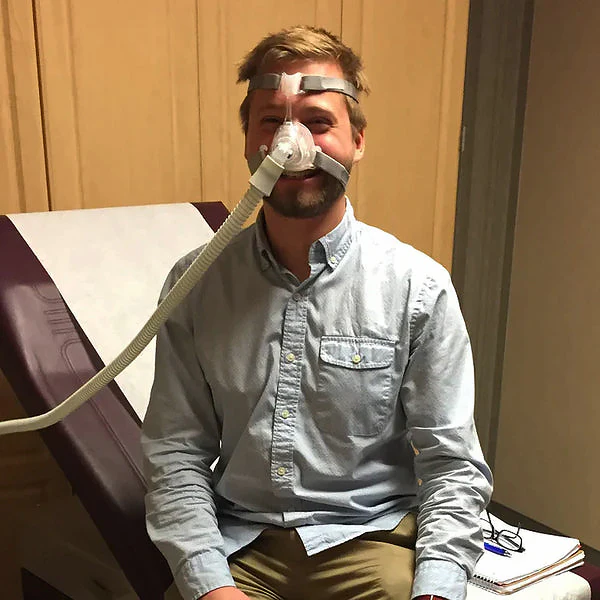
REMplenish was founded in 2017 after Anders Olmanson, while completing a Master’s in Medical Device Innovation, recognised a major gap in sleep and airway care. Up to 80% of people with obstructive sleep apnoea (OSA) remain undiagnosed, and even CPAP, the gold-standard treatment, has only around 60% compliance. The goal became clear: create a simpler, more natural way to help strengthen the airway itself.
The REMplenish™ Myo Nozzle builds tongue and airway exercise into something we already do every day, drinking water. The soft, medical-grade silicone tip creates light resistance through a narrow slit between two small openings. This resistance encourages the tongue, not the cheeks, to draw the liquid, promoting better tongue-to-palate posture and nasal breathing. In their own 2020 usability study, they report that most users noticed snoring improvements within weeks, though results vary and formal clinical trials are still emerging (REMplenish, How It Works). REMplenish
See our product pages for the REMplenish™ Myo Nozzle and the Myo Nozzle & Stainless-Steel Bottle Kit (444 ml).
At the heart of the design is a soft, medical-grade silicone tip with two small orifices linked by a narrow slit. That slit is intentional: it creates resistance to flow so the tongue, not the cheeks, does the work of drawing liquid. Users should place the nozzle fully in the mouth, anchor the tongue tip on “the spot” just behind the upper front teeth, and then compress the nozzle upward against the palate while keeping the cheeks relaxed and the jaw steady. Between sips, breathe through the nose. If the slit looks “torn,” that connecting slit is by design; it’s the feature that generates the exercise load (REMplenish, User Support / Proper Use). REMplenish
Mechanically, the nozzle shifts sipping from a cheek-suction pattern to a tongue-pump pattern. That change matters because it recruits the posterior tongue (including the genioglossus) upward toward the palate and co-activates the soft palate and pharyngeal dilators during the swallow, precisely the muscle groups targeted in orofacial myofunctional therapy (OMT). Laboratory work shows that straw drinking and effortful swallows measurably increase tongue–palate pressures, including in the posterior region, compared with relaxed swallowing (Hara, J Oral Rehabil; Steele, JSLHR). PubMed

This is why the Myo Nozzle can feel like “tiny tongue push-ups”: each sip is a micro-repetition nudging the back of the tongue up and wide against the palate rather than letting it sit low.
From a “mewing” perspective, the overlap is straightforward. Everyday mewing cues three things: tongue to the palate, lips together, nasal breathing. The Myo Nozzle bakes those same cues into a routine you already have. The lip seal is natural around the mouthpiece; the tongue elevates to compress the nozzle against the palate; and pauses between sips are an easy moment to let the nose do the breathing. Over a day, those dozens of sips become dozens of low-effort posture repetitions, an easy way to “mew while you drink.” For parents and busy adults, this turns hydration into a posture habit without adding extra exercises or screen reminders.
On the practical side, the nozzle is medical-grade silicone, BPA/BPS-free, removable for cleaning, and top-rack dishwasher safe (hand-wash recommended). Kits typically include a bottle, straw, brush and instructions; the standalone nozzle can be paired with a compatible straw. Retailers list compatibility with 8–10 mm reusable straws, which matches common stainless-steel straw diameters in our kit (REMplenishstore listing; Optimal Sleep Airway Health product spec). REMPlenish Myo Nozzle The support page also outlines care and hygiene, including occasional boiling or diluted-bleach sanitising when needed (REMplenish, User Support). REMplenish
It’s important to set expectations. While OMT as a field has growing evidence for improving snoring and apnoea indices in selected patients, usually as an support to medical care, results across reviews are mixed and depend on programme quality and adherence. The Myo Nozzle is not a medical device for diagnosing or treating sleep apnoea; it’s a habit-support tool that mirrors therapy goals by reinforcing tongue-to-palate posture throughout the day (Nagano, Sci Rep 2024 meta-analysis; Xu, Sleep Medicine Reviews 2025; Postol, J Dent Sleep Med 2024 review). Nature If you have symptoms such as loud snoring, witnessed apnoeas, or excessive daytime sleepiness, follow UK pathways via your GP for assessment and treatment, and consider adding OMT-style exercises alongside clinician-recommended care.
If you’d like to integrate this into daily life, start simple: keep the bottle in sight, anchor the tongue tip on the spot, sip with relaxed cheeks, and let the posterior tongue do the lifting. That’s the same pattern therapists coach in clinic, only now, it happens every time you hydrate. For details or to order, visit our REMplenish™ Myo Nozzle and Stainless-Steel Bottle Kit (444 ml).
When home mewing needs support: therapists, ENT and sleep care in the UK
If self-checks reveal persistent mouth breathing, snoring, or what looks like disturbed sleep, start with your GP or an ENT assessment. For adults with suspected OSA, UK pathways follow NICE NG202 for referral and diagnostic testing (home sleep study or polysomnography) and for treatment options such as CPAP or mandibular advancement devices (NICE NG202; AASM diagnostic testing guideline). NICE For children, paediatric ENT teams and sleep clinics triage by symptom severity; adenotonsillar hypertrophy is often assessed first, with adenotonsillectomy considered where appropriate (ENT UK guide; Great Ormond Street Hospital overview). Ent UK
Alongside medical care, an evaluation with a myofunctional therapist or a speech and language therapist trained in OMT can identify tongue-tie restrictions, oral habits, tongue-palate coordination, and nasal breathing barriers. OMT programmes typically include isometric and isotonic tasks for the tongue, soft palate, and lips, plus habit-shaping for nasal breathing. Evidence has evolved in recent years: narrative reviews and meta-analyses suggest that, in selected populations, OMT can reduce AHI, improve oxygen saturation, lessen snoring severity, and improve daytime sleepiness, especially as adjunct care after surgery or with CPAP (Koka et al., 2021; Liu et al., 2023; Li et al., 2025; Xu et al., 2025). Results vary by compliance, programme quality, and baseline severity; OMT is not a replacement for indicated medical treatments. ScienceDirect
Expect practical homework: daily tongue-to-palate holds, palatal “suction” drills, soft-palate lifts, and nasal hygiene strategies as needed. A device like the Myo Nozzle is not a medical device for treating OSA, but many clinicians use drinking cues to reinforce the same motor pattern: posterior tongue lift, lip seal, quiet nasal respiration between sips. This approach sits comfortably within habit retraining and general OMT-style home practice. To learn more or to book a consultation, see our Myofunctional Therapy service, our overview of benefits, and our section on manual therapy for voice, swallowing & TMJ.
Your mewing questions answered – clear, practical guidance
Is “mewing” scientifically proven to change an adult’s face shape?
There is no strong clinical evidence that mewing alone reshapes adult facial bones. Professional orthodontic organisations caution against relying on mewing for cosmetic jawline change. That said, correct tongue posture and nasal breathing are reasonable, low-risk habits that align with established orofacial function principles and may support comfort and oral health when combined with professional care where indicated (American Association of Orthodontists, Does Mewing Actually Reshape Your Jaw?). American Association of Orthodontists
How does nasal breathing help, beyond “it feels better”?
Nasal breathing filters, warms, and humidifies air and blends inhaled air with locally produced nitric oxide, which helps regulate airway tone, blood flow, antimicrobial defence, and gas exchange efficiency. This is repeatedly summarised in recent upper-airway NO reviews and broader nasal-breathing research (Maniscalco & Fiumarella; Tuma et al.). PMC
Where does OMT fit into sleep-apnoea care?
As an adjunct, not a replacement. Several recent reviews and meta-analyses report improvements in snoring and AHI in selected patients undertaking structured OMT, especially when combined with other treatments (Koka et al.; Liu et al.; Li et al.; Xu et al.). Work with your GP/sleep team to decide if OMT should be part of your plan (NICE NG202). ScienceDirect
Is the Myo Nozzle a medical treatment for OSA?
No. It’s a habit-support tool. By adding gentle resistance during sips, it cues the same tongue-to-palate action taught in therapy, making daily hydration an opportunity to rehearse good posture. It should sit alongside, not replace, medical evaluation and prescribed treatments.
What if my nose is always blocked?
Address the cause. Pharmacist-guided antihistamines or steroid sprays, saline rinses, and trigger avoidance are standard first steps for allergic rhinitis; persistent obstruction warrants assessment for structural issues (NHS/NHS Inform, Allergic rhinitis). For chronic or recurrent sinus symptoms, see NHS guidance; children can present differently from adults (NHS Inform, Sinusitis). nhs.uk
How can I start at home without overcomplicating it?
Pick one cue, “mew while you drink.” Keep your Myo Nozzle bottle visible, close your lips, lift your tongue to the palate for every sip, and breathe through your nose between sips. Layer in two or three short practice bouts daily. If you snore, struggle to breathe at night, or feel excessively sleepy, book an assessment via your GP per NICE NG202. NICE
Summary
Healthy breathing and oral rest are simple ideas with far-reaching effects. The essentials are: tongue resting to the palate, lips together without strain, and quiet nasal breathing. In children, these habits support more favourable oral function as they grow; in adults, they offer comfort and may complement clinical care for sleep-disordered breathing in selected cases. The Internet’s mewing hype may be loud, but the truly useful parttongue-up, lips-together, nasal breathing: is quiet, repeatable, and achievable.
If you’d like day-to-day support, try anchoring your new habit to hydration: “mew while you drink.” A Myo Nozzle turns every sip into a small cue for posterior-tongue lift and lip seal. To make this practical at home or work, explore the REMplenish™ Myo Nozzle and our Myo Nozzle & Bottle Kit (444 ml). If you or your child need personalised guidance, or you want to integrate OMT into a care plan, book with our team via Myofunctional Therapy and learn more about how therapy helps correct mouth breathing.
Make ‘mew while you drink’ your new defaultsmall sips, stronger tongues with the Myo Nozzle & bottle. Try the 444 ml Bottle Kit.”
Citations list
- [1] Lin et al., The impact of mouth breathing on dentofacial development : Frontiers in Public Health (2022) https://www.frontiersin.org/journals/public-health/articles/10.3389/fpubh.2022.929165/full
- [2] (On the same topic cited) Nasal nitric oxide flux from the paranasal sinuses, Current Opinion in Allergy & Clinical Immunology (2023; epub 2022) https://pmc.ncbi.nlm.nih.gov/articles/PMC10170969/
- [3] Tuma et al., Nasal breathing: a neglected factor in metabolic regulation?, European Archives of Otorhinolaryngology (2024, open access) https://link.springer.com/article/10.1007/s00405-024-09093-y
- [4] Koka et al., Orofacial Myofunctional Therapy in Obstructive Sleep Apnea: Systematic Review : Medicina (2021, open access) https://pmc.ncbi.nlm.nih.gov/articles/PMC8066493/
- [5] REMplenish, REMplenish™ Myo Nozzle, How it works, Product overview https://www.remplenish.com/pages/meet-remplenish
- American Association of Orthodontists. Does Mewing Actually Reshape Your Jaw? (2025). . American Association of Orthodontists
- Lin L, et al. The impact of mouth breathing on dentofacial development. Frontiers in Public Health (2022). [Link]. PMC
- Masutomi Y, et al. Mouth breathing reduces oral function in adolescence. Scientific Reports (2024).. Nature
- National Institute for Health and Care Excellence (NICE). NG202: Obstructive sleep apnoea/hypopnoea syndrome… in over 16s (2021). [Link]. NICE
- NICE. NG202: Context, OSAHS prevalence and overlap syndromes (2021). . NICE
- NHS. Sleep apnoea: symptoms and care (accessed 2025).. nhs.uk
- ENT UK. Paediatric Snoring & Obstructive Sleep Apnoea (Global Health Guidelines) (2024). [PDF].. Ent UK
- Great Ormond Street Hospital (NHS). Obstructive Sleep Apnoea: overview (accessed 2025).. GOSH Hospital site
- Maniscalco M, Fiumarella G. Nasal nitric oxide flux from the paranasal sinuses. Curr Opin Allergy Clin Immunol (2022). [Link]. PMC
- Tuma TC, et al. Nasal breathing: a neglected factor in metabolic regulation? Eur Arch Otorhinolaryngol (2024). [Link]. SpringerLink
- Lörinczi F, et al. Nose vs. mouth breathing, acute effects of different breathing regimens on muscular endurance. Biology of Sport (2024). PMC
- Koka V, et al. Orofacial Myofunctional Therapy in Obstructive Sleep Apnea. Healthcare (Basel) (2021). PMC
- Liu Y, et al. The Effects of Orofacial Myofunctional Therapy on Children with OSA. Children (2023). PMC
- Xu Y, et al. Efficacy of myofunctional therapy for obstructive sleep apnoea: systematic review/meta-analysis (2025). [Link]. ScienceDirect
- Deshkar M, et al. The Influence of the Tongue on the Development of Dental and Skeletal Structures. Children (2024). PMC
- Sun J, et al. Association between tongue position and dentofacial skeletal patterns. BMC Oral Health (2025). BioMed Central
- Yazdini A, et al. Induction of nitric oxide via humming does not improve short-term cognition or mood. Sci Rep (2024). PMC
- Lin C-J, et al. Effects of tongue-strengthening exercises on tongue strength and effortful swallowing pressure. Scientific Reports (2022). [Link]. Nature
- Tsou Y-A, et al. The Impact of a Tongue Training Device on Tongue Muscle Outcomes: Review. Medicina (2025). [Link]. MDPI
- NHS/NHS Inform. Allergic rhinitis: self-care & rinses (accessed 2024–2025). nhs.uk+1
- NHS Inform. Sinusitis (children & adults): symptoms and guidance (2024). NHS inform
- AASM. Clinical Practice Guideline for Diagnostic Testing for Adult OSA (2017, referenced by UK pathways). JCSM
- Hara M, et al. Effects of varying fixed lingual apex positions on tongue pressure during straw drinking. J Oral Rehabil (2014).PubMed
Disclaimer: This article is informational and UK-focused. It does not replace medical advice. If you suspect sleep-disordered breathing or have persistent nasal obstruction, please consult your GP or a qualified clinician per NICE NG202 pathways.