What Is Tongue Tie? Signs, Causes and Symptoms

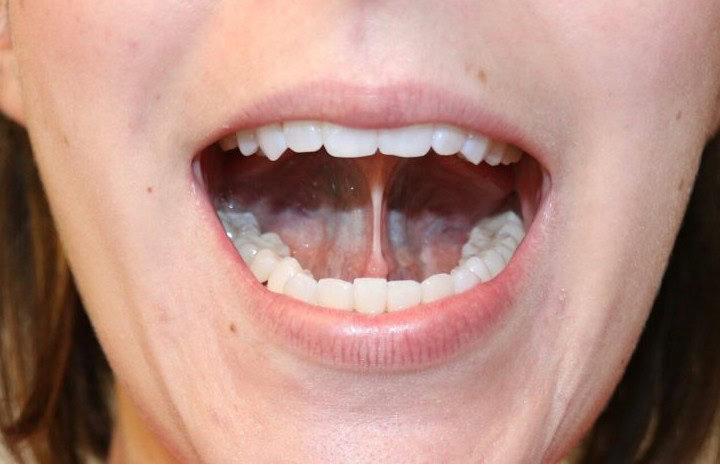
In short: Tongue tie, clinically called ankyloglossia, is when the lingual frenulum, the band of tissue under the tongue, is short or tight enough to restrict how the tongue moves. It is present from birth. The single most important thing to understand is that many people with a tongue tie, including most babies, have no symptoms and need no treatment. Function matters far more than how the tongue looks. Signs vary by age: feeding difficulty in babies, and sometimes effects on speech, chewing, swallowing, dental and palate development, and sleep in children and adults. There is no single agreed test, so a proper functional assessment, not a quick look, is what tells you whether a tongue tie is actually a problem.
Table of Contents
If you have recently come across the term tongue tie and are wondering what it means for you, your child or your baby, you are in the right place. At the very start, before any diagnosis, the amount of information online can feel overwhelming, and a good deal of it overstates the problem. This guide explains, plainly and with the evidence, what a tongue tie is, how it happens, the signs to look for at different stages of life, and the single principle that should guide any decision: whether the tongue can actually do its job.
Ankyloglossia A Functional Guide to Tongue Tie across the Lifespan
Prefer to listen? This 19 minute audio guide covers everything on this page in plain English: what a tongue tie is, the signs at each age, and why how the tongue works matters more than how it looks. Ideal while feeding, commuting or when reading feels like too much.
What exactly is a tongue tie?
A tongue tie is formally known as ankyloglossia, from the Greek words for tied (ankylos) and tongue (glossa). It is a congenital anomaly, meaning it is present from birth, in which the tongue’s movement is restricted [1].
The restriction comes from the lingual frenulum, the small band of tissue connecting the underside of the tongue to the floor of the mouth. Everyone has a frenulum; it is a normal part of the mouth’s anatomy. In a person with ankyloglossia, this frenulum is unusually short, tight or thick, which tethers the tongue down and limits how far it can lift, extend and move from side to side [1]. In more pronounced cases the tongue cannot reach past the lower gum or up to the roof of the mouth.
Tongue ties are not all the same. They vary in how thick the tissue is, how far forward it attaches, and how much they actually limit movement. Some sit close to the tip and are easy to see; others attach further back and are harder to spot, which is one reason diagnosis is not as simple as it sounds. We look at those differences in posterior vs anterior tongue tie and what a tongue tie looks like. The key point for now is that the appearance of the frenulum, on its own, tells you surprisingly little.

The most important point: function matters more than appearance
Before looking at signs and symptoms, there is a core clinical truth worth stating up front, because it is the one most often lost in online searches. Many people who have a visible tongue tie, including the large majority of infants, have no symptoms at all and will never need any treatment [2].
A frenulum can look short or tight to the eye and still allow the tongue to work perfectly well. The reverse is also true: appearance alone is a poor predictor of whether someone will have problems. This is why a diagnosis based on a quick visual check is rarely appropriate. There is currently no universally agreed screening tool that reliably predicts who will have difficulties, and the assessment tools that do exist have real limitations [3].
It is worth being honest about the state of the evidence too. This is a genuinely contested area of practice, with wide variation between clinicians in how tongue tie is diagnosed and managed [2]. Where the impact of an untreated tongue tie on feeding and speech has been reviewed systematically, the overall quality of the available evidence has been judged low [1]. None of that means tongue tie is unimportant. It means the sensible response to a possible tongue tie is a careful look at function, not a rush to label or to treat.
So what does function mean in practice? It is whether the tongue can lift, extend, seal and move food and saliva freely enough to do its everyday jobs: feeding, swallowing, clear speech, keeping the mouth clean, and resting in a healthy position. Function, not appearance, is the deciding factor.
How common is tongue tie?
The honest answer is that nobody can give you a precise figure. Prevalence estimates vary a good deal between studies, largely because researchers use different definitions and different measurement scales, so there is no single agreed number [3]. One study in a newborn nursery found a tongue tie in around 4.2 per cent of babies [4], but other studies report higher or lower rates depending on how they define a tie and who is doing the assessing.
Part of the variation is practical. An anterior tie near the tip is easy to count; a posterior tie sitting further back is more easily missed, so the same baby might be recorded differently by two assessors. The honest position is that the true figure is hard to pin down globally, precisely because the field lacks a standard definition and screening method [3]. What the data does show fairly consistently is that tongue tie is more common in boys than in girls [6].
What causes a tongue tie?
Because ankyloglossia is congenital, it develops before birth. The exact mechanisms are not fully understood. There is some evidence of a possible genetic component: one analysis of family pedigrees suggested an inherited, X-linked pattern in some cases [6]. This should be read cautiously, as limited evidence from a small body of work rather than an established fact for every case. Most tongue ties occur as an isolated finding in otherwise healthy children, with no other underlying condition.
Signs and symptoms across the lifespan
The signs of a restricted frenulum show up differently with age, because what we ask of the tongue changes as we grow from milk-fed infants to adults speaking, chewing and breathing through the night. The sections below walk through each stage.
Tongue tie in babies

In newborns, the tongue’s most important job is feeding. To latch well at the breast, a baby needs to extend the tongue over the lower gum and cup it around the breast to form a seal, then use a rhythmic motion to draw milk. A tight frenulum can make that seal difficult to achieve and to hold [2][4].
When the latch is compromised, the knock-on effects fall on both baby and mother. For the baby, it can mean slipping off the breast, long and tiring feeds, swallowing air, frustration, poor milk intake and slower weight gain. For the mother, a shallow or pinching latch often causes sore, cracked or damaged nipples, and because the breast is not drained well, milk supply can fall over time [2]. It can become a self-reinforcing cycle that undermines breastfeeding even when both mother and baby are trying hard.
Two things need saying clearly, though, because they are so often missed. First, a tongue tie does not guarantee feeding problems. Most babies with a tongue tie feed without difficulty, and the majority breastfeed successfully with no surgery at all [2][4]. Second, this is exactly why blanket treatment is not recommended. The evidence does not support releasing every infant with a visible tie. Rather, there appears to be a specific subset of babies in whom a significant tie and genuine, persistent breastfeeding difficulty occur together, and it is that subset who may benefit from a release [2]. Passive bottle feeding tends to be less affected than breastfeeding, since it places different demands on the tongue.
If feeding is going well, a visible tie in a baby is usually something to note rather than act on. If it is not, the right next step is a proper feeding assessment, ideally with someone who can watch a full feed. For more detail, see our guide to tongue tie in babies.
Tongue tie in children
As children move on to solid food and begin to talk, the demands on the tongue change again. A restricted tongue can interfere with moving food around the mouth for safe, efficient chewing and swallowing, and some children find certain textures harder to manage [1].
For speech, limited tongue mobility can affect the pronunciation of sounds that need precise tongue-tip movement, including s, z, t, d, l and especially r [1]. Here, though, it is important to be clear about what the evidence does and does not say. Many children with a tongue tie develop completely normal speech. Difficulty with a few specific sounds is not the same thing as a delay in language development, and a tongue tie does not cause language delay. The relationship between a tight frenulum and speech is genuinely complex, and a release is not an automatic fix for a speech difficulty [1]. We unpack this properly in does tongue tie affect speech.
Tongue posture, the palate and the airway
This is the area that surprises most parents, and it is worth taking slowly. Ideally, the tongue rests gently against the roof of the mouth, where it acts as a natural internal support for the developing upper jaw and palate. When a tongue is tethered low and forward, that support is reduced, and the form of the mouth and the function of the tongue begin to influence one another in a loop.
Researchers in craniofacial sleep medicine describe it this way: an abnormal form such as a tongue tie leads to altered compensatory function, like changed sucking and swallowing patterns, and that altered function can in turn affect the shape and size of the developing palate [7]. A narrow, high-arched palate and reduced palatal width are recognised among the dento-craniofacial features linked to a smaller upper airway, and a smaller upper airway is itself associated with a higher risk of sleep-disordered breathing [7]. Features such as crowded teeth, a narrow upper arch and a tongue tie can together point towards a smaller maxilla and a narrower nasal airway [7].
The practical consequence is that some children with a low-resting, tethered tongue settle into chronic mouth breathing, and a short frenulum is recognised as one of several features associated with paediatric sleep-disordered breathing and obstructive sleep apnoea [7]. Signs parents sometimes notice include habitual mouth breathing, snoring and restless, broken sleep [7]. None of this means a tongue tie causes sleep apnoea on its own. It is one feature among several that a clinician weighs up, which is precisely why a proper assessment matters more than any single observation.
Tongue tie in adults
It is worth being honest that adult-specific evidence is far more limited than the research in infants, and much of it comes from smaller observational studies rather than large trials. It is sensible to treat strong claims about adult tongue tie with healthy scepticism.
Where data and clinical experience do point, some adults with an untreated tongue tie report ongoing difficulty with particular foods or with swallowing efficiently. Some describe secondary effects that have built up over years of unconscious compensation, such as tension in the neck, jaw and face, though this is more often seen in clinic than proven in trials. As in children, a restricted tongue may be associated with airway compromise and with snoring linked to sleep apnoea [7]. These points should not be overstated. Many adults with a tight frenulum have developed effective habits over a lifetime and experience no real impact at all. If a tongue tie is causing problems in adulthood, the same principle holds: assessment of function comes first. See adult tongue tie and our guide on whether you can treat a tongue tie without surgery.
What a proper assessment actually looks at
Because appearance is such an unreliable guide, a worthwhile assessment is functional, not visual. Rather than glancing under the tongue and assigning a label, a thorough assessment looks at what the tongue can do and what effect any restriction is having on daily life.
In practice that means looking at things like:
- how far the tongue can lift towards the roof of the mouth, extend past the lower gum, and move from side to side
- where the tongue naturally rests when the mouth is at ease
- how breathing happens at rest, through the nose or the mouth
- how swallowing, and in babies feeding, actually work in real time
- whether any restriction is linked to a real-world symptom, rather than existing in isolation
Good assessment also looks beyond the tongue itself, taking in jaw posture, facial tension and breathing habits, because these work together as a system. It often involves working alongside other professionals: an infant feeding specialist or lactation consultant for babies, a dentist or orthodontist for jaw and palate development, an ENT for the airway, and a speech and language therapist where speech or swallowing is the concern. Tongue tie sits at the meeting point of several fields, and the best care reflects that.
When to seek an assessment, and when to wait
The presence of a tongue tie is not, by itself, a reason to do anything. Plenty of tongue ties are best left alone and simply noted. The thing that should prompt an assessment is a persistent, real-world difficulty that is not resolving, for example:
- a baby who is not feeding well or gaining weight, or a mother in ongoing pain despite good feeding support
- speech sounds that are causing a child genuine difficulty or distress, once age-appropriate development has been allowed for
- chewing, swallowing or eating that remains effortful
- signs of disturbed sleep or persistent mouth breathing
- in adults, daily discomfort, restriction or symptoms you suspect are linked to tongue mobility
Watchful waiting is a legitimate and often sensible choice, particularly where things are improving on their own. The aim is never to fix a frenulum because it happens to be there. It is to address a problem that is genuinely affecting feeding, function or comfort.
From our clinic: Emily Kirkcaldy, Clinical Lead
The following reflects Emily’s professional experience and opinion, drawn from clinical practice. It sits alongside, not within, the research above.
I regularly meet parents and adults who are anxious about a possible tongue tie, often after reading something online that has frightened them. When I assess someone, my priority is never simply to look at the tissue under the tongue and assign a label. Appearance alone is not the whole picture, and I have lost count of the number of perfectly functional tongues I have seen that happen to have a visible frenulum.
What I am really interested in is how the tongue works in daily life. Can it lift to the roof of the mouth? Does it allow comfortable swallowing, efficient chewing and easy nasal breathing? Where does it sit at rest? One thing experience teaches you is that people are remarkably good at compensating. An adult in particular may have spent decades working around a restriction without realising it, and that compensation can surface elsewhere, as tension in the jaw, neck or face, or as a habit of breathing through the mouth. So I assess the whole system, not one band of tissue in isolation.
Quite often a person has a visible frenulum but genuinely good function, and no intervention is needed at all. When function is affected, my aim is to be honest about what is realistic. Sometimes targeted therapy improves things and a release is never needed. Sometimes therapy is most useful before and after a release carried out by a dental or surgical colleague. And sometimes the tongue is not the main issue at all. My job is to focus on your actual symptoms, and on whether tongue mobility is genuinely affecting your quality of life, rather than to rush to fix something that may not be a problem.
A quick map of related questions
Because this is an overview, here is a brief signpost to the more specific questions you may have, each covered in its own guide:
- What a tongue tie looks like: typically a short band of tissue under the tongue, sometimes giving a heart-shaped dip at the tip when the tongue lifts. Appearance alone is unreliable, so see what a tongue tie looks like.
- Posterior versus anterior types: an anterior tie sits near the front and is easy to see; a posterior tie sits further back and is harder to spot. More in posterior vs anterior tongue tie.
- Effect on speech: it can complicate certain sounds but does not delay language development. See does tongue tie affect speech.
- Treating without surgery: approaches like orofacial myofunctional therapy, a programme of targeted exercises to improve tongue strength, coordination and resting posture, can sometimes ease symptoms and improve function [5]. It is not a guaranteed alternative to a release in every case, but it is an evidence-supported option worth understanding. See fixing tongue tie without surgery.
- The release procedure: if treatment is needed, a release (frenectomy or frenuloplasty) is a minor procedure to free the tight tissue. The procedure itself is carried out by a dentist, ENT or surgeon, and the therapy around it often matters as much as the cut. See tongue tie release: why therapy before and after matters.
Your next steps
Coming across the term tongue tie for the first time can prompt a lot of questions, and a lot of worry that often turns out to be unnecessary. The key takeaway is this: the presence of a tight frenulum does not, by itself, mean you or your child needs treatment. Function and daily comfort are the real indicators, and a careful assessment is what turns uncertainty into a clear answer. This article is for general information and does not replace individual medical advice.
If you are noticing persistent difficulty with feeding, swallowing, chewing, speech or sleep, a professional assessment can give you clarity. Arrange a discovery call or book an assessment with Breathe First, and we will look at your situation properly. You can also read about our myofunctional therapy and browse our FAQs.
Frequently asked questions
What is a tongue tie?
A tongue tie, medically called ankyloglossia, is a condition present from birth where the lingual frenulum, the band of tissue under the tongue, is unusually short, tight or thick and restricts the tongue’s movement.
Does a tongue tie always need to be treated?
No. Many people with a visible tongue tie, including most babies, have no symptoms and never need treatment. How the tongue functions matters far more than how it looks.
How common is tongue tie?
Estimates vary because there is no single agreed diagnostic standard. One newborn study found a rate of around 4.2 per cent, and tongue tie is more common in boys than girls.
What causes a tongue tie?
It develops before birth and the exact cause is not fully understood. There is limited evidence of a possible genetic, X-linked component in some cases, but it usually occurs as an isolated finding.
Can a tongue tie affect speech?
It can make some consonants harder to pronounce, such as s, z, t, d, l and r. However, many children with a tongue tie develop normal speech, and it does not cause a delay in language development.
What are the signs of a tongue tie in a baby?
In babies the main sign is difficulty latching at the breast, which can lead to poor milk intake, slow weight gain and nipple pain for the mother. Many babies still feed well without treatment.
References
[1] Gaba, F. I., & Sheth, C. C. (2023). The Impact of Untreated Ankyloglossia on Feeding, Speech and the Psychosocial Domain: A Systematic Review and Meta-Analysis. SCIREA Journal of Clinical Medicine, 8(4), 306-340. https://doi.org/10.54647/cm321144
[2] Rowan-Legg, A.; Canadian Paediatric Society (2015). Ankyloglossia and breastfeeding. Paediatrics & Child Health, 20(4), 209-213. https://doi.org/10.1093/pch/20.4.209
[3] Hill, R. R. (2019). Implications of Ankyloglossia on Breastfeeding. MCN: The American Journal of Maternal/Child Nursing, 44(2), 73-79. https://doi.org/10.1097/nmc.0000000000000501
[4] Ricke, L. A., et al. (2005). Newborn Tongue-tie: Prevalence and Effect on Breast-Feeding. The Journal of the American Board of Family Medicine, 18(1), 1-7. https://doi.org/10.3122/jabfm.18.1.1
[5] González Garrido, M. del P., et al. (2022). Effectiveness of Myofunctional Therapy in Ankyloglossia: A Systematic Review. International Journal of Environmental Research and Public Health, 19(19), 12347. https://doi.org/10.3390/ijerph191912347
[6] Han, S.-H., et al. (2012). A Study on the Genetic Inheritance of Ankyloglossia Based on Pedigree Analysis. Archives of Plastic Surgery, 39(4), 329-332. https://doi.org/10.5999/aps.2012.39.4.329
[7] Heit, T., et al. (2022). Craniofacial Sleep Medicine: The Important Role of Dental Providers in Detecting and Treating Sleep Disordered Breathing in Children. Children, 9(7), 1057. https://doi.org/10.3390/children9071057